
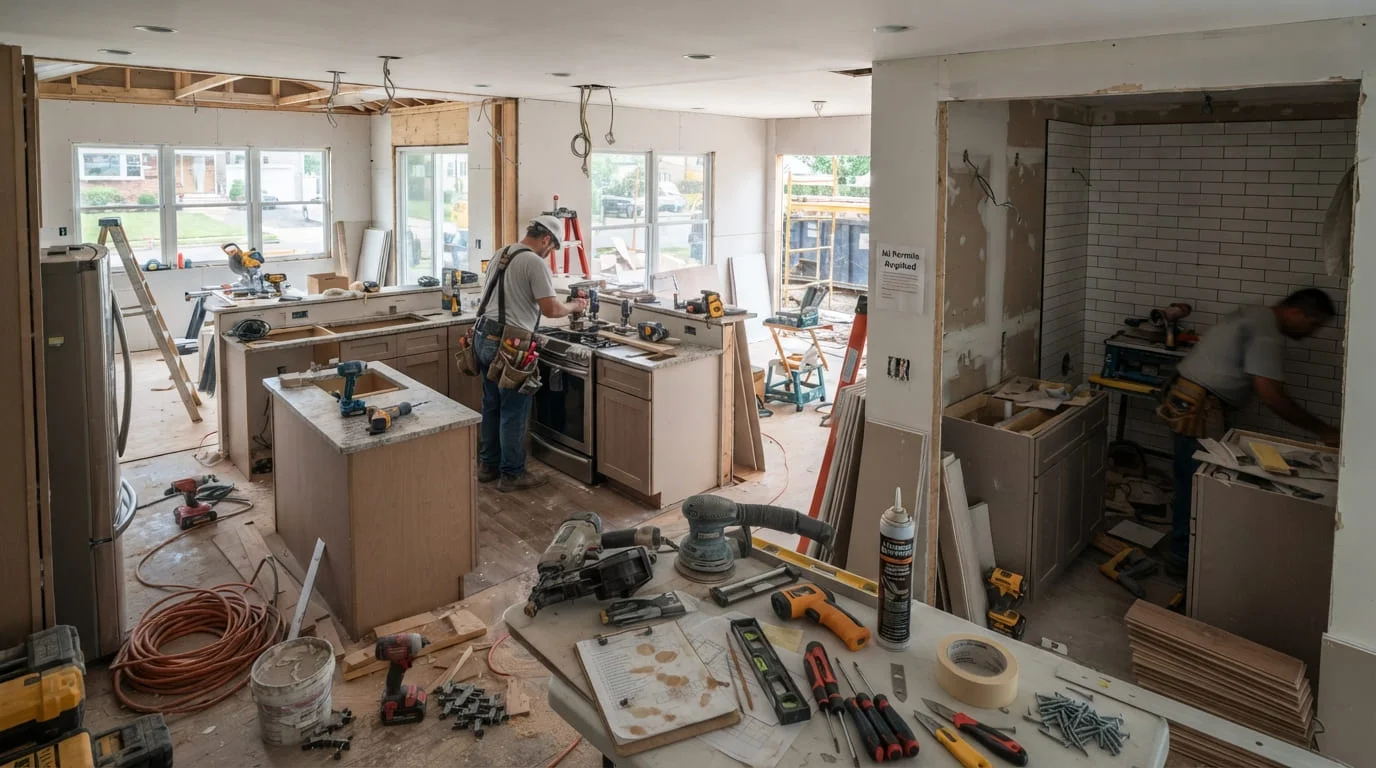
One of the first questions homeowners ask before starting a renovation is how long the project will take. The answer depends on the type of renovation, the size of the property, permits, material availability, and the complexity of the work.
While every project is different, having a realistic timeline can help you plan your budget, living arrangements, and expectations. Here are typical construction timelines for common home renovation projects in New Jersey.
Typical Home Renovation Timelines in NJ
Here are typical construction timelines for common renovation projects in New Jersey:
- Kitchen remodel: 4 to 8 weeks
- Bathroom renovation: 3 to 6 weeks
- Home addition: 8 to 16 weeks
- Full home remodel: 12 to 24 weeks
These are general estimates for the construction phase. The complete process can take longer when design, material selection, permits, inspections, and other preparation are included.
Kitchen Remodel Timeline in NJ
A typical kitchen remodel takes approximately 4 to 8 weeks once construction begins. A smaller renovation with limited structural changes can often be completed faster, while a larger project may take longer.
The process can include demolition, electrical and plumbing work, cabinets, countertops, flooring, lighting, appliances, and final installation.
One of the biggest factors is the availability of cabinets, countertops, appliances, and other materials. Ordering important items before construction starts can help prevent unnecessary delays.
Bathroom Renovation Duration
A standard bathroom renovation usually takes about 3 to 6 weeks. The timeline depends on the size of the bathroom and how much of the existing plumbing, electrical system, walls, and flooring needs to be changed.
A cosmetic renovation can be relatively quick. Moving plumbing, changing the layout, installing custom features, or addressing hidden water damage can add additional time.
Home Addition Timeline
A home addition typically takes around 8 to 16 weeks of construction. Larger additions and projects that require significant structural work can take longer.
An addition may involve excavation, foundation work, framing, roofing, windows, insulation, electrical and plumbing systems, HVAC, drywall, flooring, and finishing work. Because of the number of trades involved, careful scheduling is particularly important.
Permits and inspections can also affect the overall home addition timeline. The time required for approvals varies depending on the municipality and the complexity of the project.
Full Home Remodel Timeline
A full home remodel can take approximately 12 to 24 weeks or longer. Projects involving several rooms, structural changes, new plumbing and electrical systems, or extensive custom finishes usually require more planning and coordination.
Because multiple parts of the home may be under construction at the same time, homeowners should discuss the sequence of work with their contractor before the project begins.
What Can Delay a Home Renovation?
Even a well planned renovation can take longer than expected. Some of the most common factors include:
Permits and inspections: Required approvals can affect when certain stages of construction can begin.
Material lead times: Cabinets, windows, appliances, countertops, and custom materials may have long production or delivery times.
Change orders: Changing the design or materials after construction begins can add both cost and time.
Unexpected conditions: Older homes may have hidden plumbing, electrical, structural, or moisture problems that only become visible after demolition.
Weather: Exterior work, excavation, roofing, and additions can be affected by severe weather conditions.
How to Keep Your Renovation on Schedule
Start planning before demolition begins. Finalize the design, choose materials, and order long lead items as early as possible.
Make sure the contract includes a clear scope of work and an expected project schedule. Ask your contractor how potential delays will be communicated and how changes will affect the completion date.
It is also important to avoid unnecessary changes once construction begins. A clear plan allows your contractor and subcontractors to coordinate their work more efficiently.
A realistic timeline does not mean every project will finish on an exact date. Good planning gives homeowners a better understanding of what to expect and helps reduce avoidable delays.
If you are planning a renovation in New Jersey, NJ Home Project can help you understand the work involved, plan your project, and create a realistic schedule for your home improvement goals.