
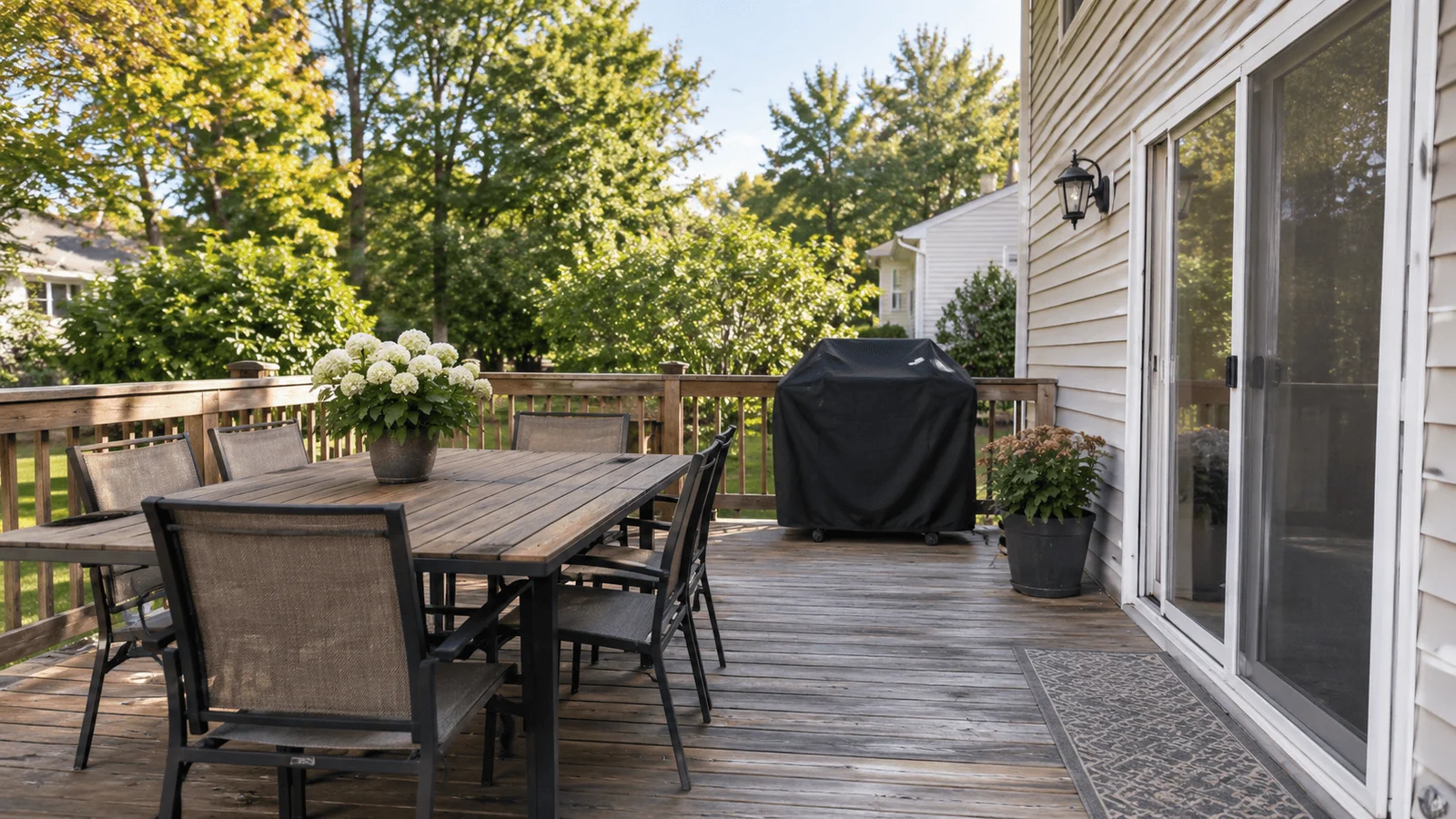
A backyard deck is a great place to relax, entertain guests, and enjoy warmer weather. But after years of exposure to rain, snow, humidity, and temperature changes, even a well-built deck can start showing signs of wear.
You might notice a few loose boards, a wobbly railing, or stairs that no longer feel stable. Does that mean you need a completely new deck, or can the existing structure be repaired?
For New Jersey homeowners, the answer depends on more than appearance. The condition of the supporting structure, the extent of the damage, and the cost of repairs all matter. Here is how to evaluate your deck and decide which option makes more sense.
1. Start With the Structure\, Not the Appearance
One of the biggest mistakes homeowners make is judging a deck by its surface. Fresh stain and replacement boards can make an old deck look almost new, but they do not fix problems underneath.
Before deciding what to do, inspect these important areas.
Deck boards
Look for:
- Cracked, warped, or splintered boards.
- Soft spots that feel spongy underfoot.
- Rot around nails and screws.
- Boards that move when you walk on them.
For example, if only two or three boards are cracked while the framing underneath is dry and solid, replacing those boards may be enough.
However, if several boards feel soft or show signs of moisture damage, the problem may extend to the joists beneath them.
Railings and stairs
Railings should feel secure when you apply moderate pressure. Loose posts, wobbly handrails, and damaged stair treads should never be ignored.
Pay particular attention to the connections between railing posts and the deck frame. A railing that looks fine but moves when pushed may have loose or deteriorated fasteners.
Stairs also deserve attention. Check for uneven steps, loose connections, cracked stringers, and signs of rot where the stairs meet the ground or deck.
Posts, beams, and joists
These components support the entire deck. Inspect them for:
- Rot, especially near the ground.
- Cracks and splitting.
- Water damage and soft wood.
- Sagging or uneven sections.
- Loose or corroded metal connectors.
If a deck feels noticeably bouncy or has started to sag, do not assume that replacing the surface boards will solve the problem. The supporting structure needs to be evaluated.
Connections to the house
The ledger board connects an attached deck to the house. It is one of the most important areas to inspect because improper fastening or water intrusion can compromise the connection.
Look for visible gaps, corrosion, damaged flashing, or signs of rot around the connection. If you notice movement or separation, have the structure assessed by a qualified professional before using the deck.
2. When Is Deck Repair Enough?
Repairing an existing deck can be a sensible choice when the damage is limited and the main structure remains sound.
Common situations where localized repairs may work include:
- A few cracked or damaged deck boards.
- Loose screws, nails, or hardware.
- Minor railing damage with otherwise solid supports.
- Individual stair treads that need replacement.
- Peeling paint or worn stain.
- Small areas of surface deterioration without structural damage.
A practical example: Imagine a 200-square-foot deck that looks worn because several boards are cracked and the stain has faded. After inspection, the joists, beams, posts, and connections are found to be in good condition.
In this situation, replacing the damaged boards, tightening or upgrading appropriate fasteners, and refinishing the surface may restore the deck without the expense of a full replacement.
Before choosing repairs, ask your contractor to check the framing underneath. A surface-level fix is only worthwhile if the structure can safely support it.
3. When Should You Replace the Entire Deck?
Sometimes repairs become more expensive and less reliable than starting over.
Full replacement may be the better option when:
The structural framing is deteriorated. Extensive rot in joists, beams, or support posts can make the deck unsafe.
Multiple components are failing. If the boards, stairs, railings, and supporting structure all need significant work, replacing everything may be more practical.
The deck is sagging or unstable. Noticeable movement, separation from the house, or uneven sections can indicate serious structural problems.
The original construction has significant deficiencies. An older deck may have inadequate connections, improper supports, or other issues that require more extensive reconstruction.
Repair costs keep adding up. Replacing a few boards today and repairing another section next year may eventually cost more than a properly planned replacement.
An important point: a deck does not necessarily need to be replaced just because it is old. A well-maintained structure can last for many years. Its actual condition matters more than its age.
4. How Much Does Deck Replacement Cost in NJ?
The cost of replacing a deck in New Jersey depends on its size, materials, design, accessibility, and the condition of the existing structure.
Here are the main factors that affect your budget.
Deck size and design
A simple rectangular deck is generally less expensive to build than one with multiple levels, built-in seating, custom railings, or complicated stairs.
Larger decks also require more framing, decking material, hardware, and labor.
Material selection
Pressure-treated wood is often a more budget-conscious option, but it requires regular maintenance.
Composite decking usually has a higher initial material cost but generally requires less maintenance than traditional wood. It is also available in different colors and finishes.
Natural wood species and premium composite products can increase the total project cost.
Condition of the existing structure
If the old deck has extensive rot or unstable supports, additional demolition and reconstruction may be necessary.
A replacement project may also require improvements to footings, framing, or connections.
Access and demolition
A deck that is easy to access and remove is generally simpler to replace.
If the structure is elevated, located in a tight backyard, or difficult to reach with equipment, labor and debris removal costs may increase.
Do not forget disposal fees. Removing the old deck, transporting debris, and renting a dumpster can add to the project budget.
5. Wood or Composite: Which Is Better for Your New Deck?
If you decide to replace your deck, choosing the right material is just as important as deciding on its size and design.
Pressure-treated wood is a practical choice if you want a lower initial cost. However, it needs regular cleaning, sealing, or staining to protect it from moisture and weather exposure.
Composite decking is made from a combination of materials and is designed to reduce routine maintenance. It does not require the same regular staining as wood, although it still needs cleaning and can become hot in direct sunlight depending on the product and color.
For New Jersey homes, consider how much maintenance you are willing to handle and how exposed your deck is to sun, rain, and snow.
A slightly more expensive material may be worthwhile if it reduces the time and money spent on maintenance over the years.
6. How to Inspect Your Deck Before Hiring a Contractor
You can perform a basic visual check before requesting an estimate. This will help you explain the problems and ask more specific questions.
Walk around the deck and look for visible damage. Check the boards, railings, stairs, posts, and areas where the structure connects to the house.
You can also:
- Look underneath the deck for rot, cracks, and loose connections.
- Check whether posts appear straight and properly supported.
- Notice whether the deck feels unusually bouncy or uneven.
- Look for standing water and poor drainage.
- Check whether the wood is soft or visibly deteriorating.
Do not rely on a visual inspection alone to confirm structural safety. Avoid climbing underneath an unstable deck or attempting to test damaged supports yourself.
If you notice sagging, significant movement, or deterioration in structural components, restrict access and arrange a professional assessment.
When comparing contractor estimates, ask whether the price includes demolition, debris disposal, structural repairs, new footings if needed, railings, stairs, permits, and inspections.
For New Jersey projects, confirm which permits and inspections apply to your specific deck and municipality before work begins.
Ready to Repair or Replace Your Deck?
A damaged deck does not always need to be replaced, but ignoring structural problems can lead to more expensive repairs and safety risks. The right decision starts with understanding the condition of the existing structure and comparing the long-term costs of both options.
NJ Home Project can help you plan your deck renovation and other home improvement projects. Whether you need to repair an existing outdoor space or build a completely new deck, contact us to discuss your project and explore the right solution for your home.