
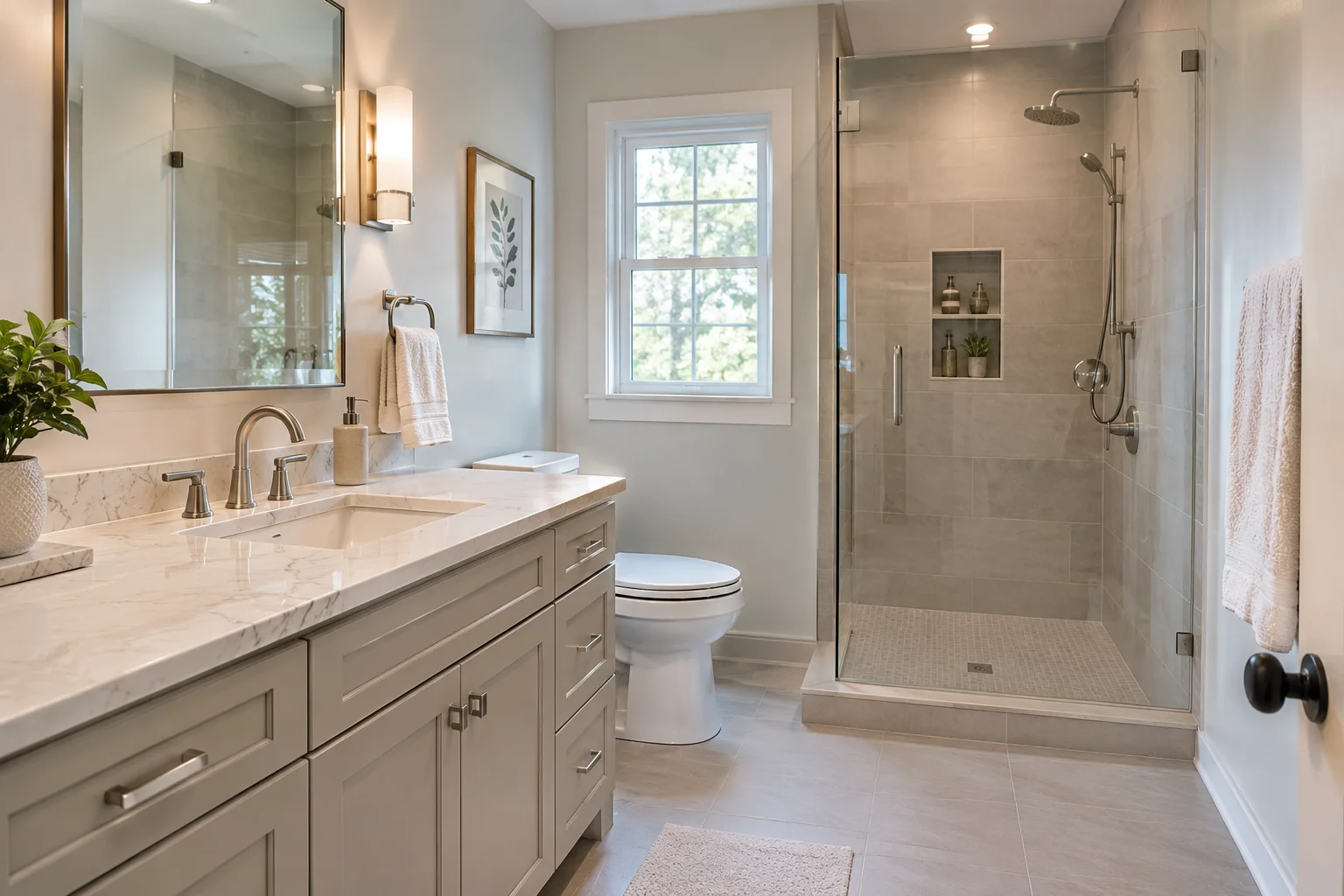
A bathroom renovation can improve comfort, functionality, and the value of your home. However, even a beautiful bathroom can become frustrating to use if important details are overlooked during planning or construction.
Some bathroom remodeling mistakes are easy to fix during the design stage but expensive to correct after the tile is installed, walls are closed, or plumbing fixtures are in place. Before starting a bathroom remodel in NJ, consider these seven common problems and how to avoid them.
1. Neglecting Waterproofing
Waterproofing is one of the most important parts of a bathroom renovation. Poorly sealed showers, improperly installed waterproof membranes, and weak connections around drains can allow moisture to reach the underlying structure.
Over time, water intrusion can contribute to mold growth, damaged drywall, deteriorating materials, and costly repairs.
To avoid this problem, make sure the contractor uses an appropriate waterproofing system for the shower and other wet areas. Ask how the shower walls, floor, corners, and drain connections will be protected before tile installation begins.
Remember that tile and grout alone do not make a shower waterproof. The system behind them matters just as much.
2. Choosing Poor Ventilation
Bathrooms produce significant moisture, especially during hot showers. Without adequate ventilation, humidity can build up and contribute to condensation, peeling paint, mold, and damage to cabinets or other finishes.
A window can help, but it may not provide sufficient ventilation throughout the year.
Consider installing a properly sized exhaust fan that vents outdoors rather than into an attic or another enclosed space. The fan should be appropriate for the bathroom size and meet applicable building requirements.
During a bathroom renovation in NJ, also consider the location of the fan, its noise level, and how easily it can be maintained.
3. Getting Measurements Wrong
Incorrect measurements can cause problems with vanities, shower enclosures, toilets, doors, and other fixtures. A vanity that is too large can restrict movement, while a poorly positioned shower door may interfere with nearby fixtures.
Before ordering materials, measure the room carefully and confirm the dimensions of every major fixture. Account for door swings, drawer openings, shower entry space, and access to plumbing connections.
It is also important to check whether the existing walls and floors are level. Older New Jersey homes may have uneven surfaces that require adjustments before new fixtures can be installed.
Accurate measurements help prevent expensive ordering mistakes and last minute design changes.
4. Ignoring Storage Needs
A bathroom may look spacious but still lack practical storage. Without enough room for toiletries, towels, cleaning supplies, and everyday essentials, countertops can quickly become cluttered.
Think about how your household uses the bathroom before choosing a vanity or cabinet layout.
Consider a vanity with drawers, a recessed medicine cabinet, built in shower niches, or shelving above the toilet where appropriate. Make sure storage solutions do not interfere with plumbing, electrical components, or comfortable movement.
Planning storage early helps create a bathroom that remains organized long after the renovation is complete.
5. Installing Inadequate Lighting
A single ceiling light may not provide enough illumination for grooming, shaving, applying makeup, or cleaning. Poorly positioned fixtures can also create shadows around the mirror.
A practical bathroom lighting plan combines general lighting with task lighting around the vanity. Additional lighting inside a shower or near storage areas can improve visibility when suitable fixtures are used.
Choose fixtures rated for their intended bathroom location and follow applicable electrical safety requirements. Proper lighting placement should be considered before mirrors, cabinets, and electrical connections are finalized.
6. Moving Plumbing Without Considering the Cost
Changing the location of a toilet, shower, or sink can improve the layout, but it may also increase the renovation budget.
Moving plumbing connections can require additional labor, new pipe runs, drain modifications, and changes to walls or flooring. In some homes, the existing structure may make these changes particularly complicated.
Before deciding to relocate fixtures, ask a bathroom contractor in NJ to compare the cost of keeping the existing plumbing layout with the cost of moving it.
If the current arrangement works reasonably well, investing in better storage, lighting, fixtures, or finishes may deliver more value without unnecessary plumbing changes.
7. Choosing Materials That Are Difficult to Maintain
Some bathroom materials look attractive in a showroom but require more cleaning and maintenance than homeowners expect.
For example, certain natural stones need periodic sealing, while heavily textured surfaces can be harder to clean. Very dark finishes may also make water spots and mineral deposits more noticeable.
Consider how much time you want to spend maintaining the bathroom. Porcelain tile, suitable moisture resistant finishes, and easy to clean surfaces can be practical options for many households.
Pay attention to slip resistance for bathroom flooring and select materials appropriate for wet environments. Ask how often a material needs sealing, which cleaning products are safe, and whether replacement parts will be readily available.
How to Avoid Costly Bathroom Renovation Mistakes
The best way to prevent bathroom renovation problems is to make important decisions before construction begins. Finalize the layout, confirm measurements, select materials, plan lighting and storage, and discuss waterproofing and ventilation with your contractor.
Ask for a detailed written estimate that explains the scope of work, materials, plumbing changes, and any required permits. Confirm who is responsible for coordinating inspections and resolving unexpected issues.
A successful bathroom remodel is about more than appearance. Proper preparation helps protect your home from moisture damage, improves everyday functionality, and reduces the risk of expensive changes during construction.
If you are planning a bathroom renovation in New Jersey, NJ Home Project can help you plan your project and create a space that suits your home, needs, and budget.