
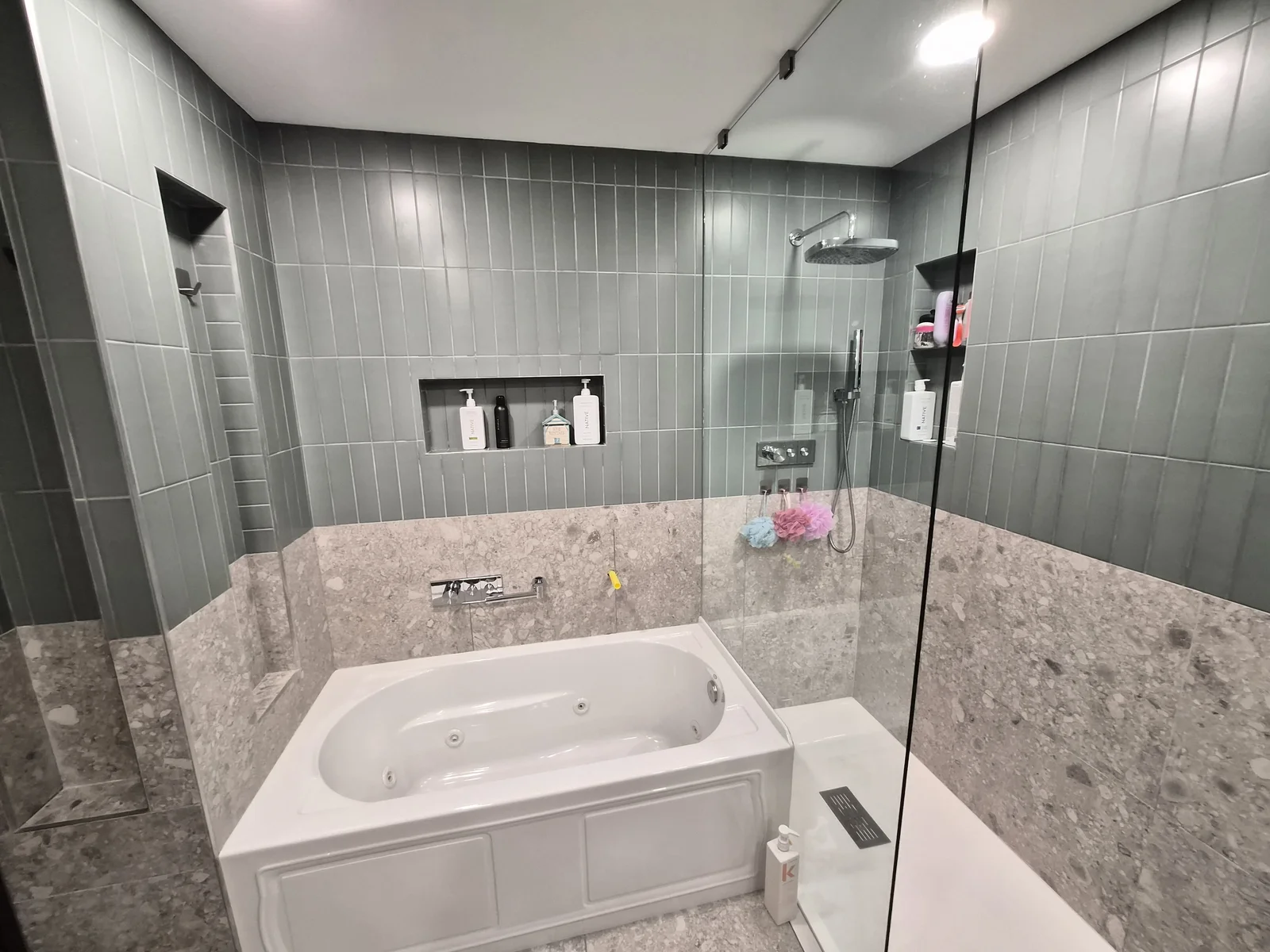
Choosing between a walk-in shower and a bathtub is one of the most important decisions in a bathroom remodel. Both options have practical advantages, but the right choice depends on your available space, budget, accessibility needs, and long-term plans for your home. For homeowners planning a bathroom renovation in NJ, it is worth considering how each option will fit into everyday life and affect future resale value.
Space and Design Options
Walk-in showers are often a good choice for small bathrooms because they can make the room feel more open. Frameless glass panels, large-format tiles, and recessed niches create a clean, modern look without adding visual clutter. A walk-in shower can also be customized to fit an awkward layout or an unused corner.
Bathtubs generally require more floor space and a specific installation area.
However, they come in many styles, from standard alcove tubs to freestanding models that serve as a design feature. A bathtub can be an excellent option if you enjoy soaking or want to create a spa-like bathroom.
When planning a bathroom remodel in NJ, consider the entire layout rather than the fixture alone. The placement of the vanity, toilet, storage, and plumbing can influence which option makes the most sense.
Installation Costs
The cost of a shower vs. bathtub installation depends on the size of the project, materials, plumbing requirements, and the condition of the existing bathroom.
A walk-in shower may cost more than a basic bathtub replacement, particularly when the project involves custom glass, premium tile, waterproofing, or a curbless design. On the other hand, replacing an existing tub with a similar model can be relatively straightforward if the plumbing and surrounding surfaces are in good condition.
Converting a bathtub into a walk-in shower may involve additional demolition, drainage adjustments, and waterproofing work. Installing a new bathtub can also become more expensive if the bathroom needs structural modifications or upgraded plumbing.
Before making a decision, request a detailed estimate that includes labor, materials, waterproofing, fixtures, and any necessary repairs. Comparing the full project costs will give you a more realistic picture than looking at the price of the shower or tub alone.
Accessibility and Everyday Use
Walk-in showers are often more convenient for people who have difficulty stepping over a high bathtub edge. Low-threshold or curbless designs can make entering and exiting easier, while grab bars, built-in benches, and handheld showerheads can improve safety and comfort.
However, not every walk-in shower is automatically accessible. Slippery surfaces, poor drainage, and insufficient space can create safety concerns. Proper design and installation are essential.
Bathtubs can be less convenient for older adults and people with limited mobility because getting in and out requires stepping over the tub wall. Still, they remain useful for families with young children and for anyone who enjoys a relaxing soak.
Think about who uses the bathroom most often and whether your needs might change over time. A bathroom renovation should support your current routine while remaining practical for years to come.
Maintenance and Resale Value
Walk-in showers with frameless glass can look elegant, but glass doors may require frequent cleaning to prevent water spots and soap buildup. Grout and tile joints also need regular maintenance. Choosing quality materials, effective ventilation, and well-installed waterproofing can help reduce future problems.
Bathtubs are generally straightforward to clean, although the surrounding walls, caulking, and fixtures still require attention. Acrylic and fiberglass tubs are typically easier to maintain than some specialty finishes.
Resale value is another consideration. Modern walk-in showers can appeal to buyers looking for contemporary design and convenience. However, removing every bathtub from a home may limit its appeal to families with young children or buyers who prefer bathing.
If you have more than one bathroom, keeping at least one bathtub is often a sensible choice. It provides flexibility for different household needs and can help preserve appeal to a wider range of buyers. If your home has only one bathroom, consider your family’s lifestyle and the expectations of buyers in your local market before replacing the tub.
Which Option Is Right for Your Bathroom?
A walk-in shower may be the better choice if you prioritize accessibility, a modern appearance, and efficient use of space. A bathtub may be more suitable if you have young children, enjoy soaking, or want to maintain bathing options for future occupants.
There is no universal answer to the walk-in shower vs. tub debate. The best solution balances comfort, cost, maintenance, and resale considerations with the layout of your home.
Planning a bathroom remodel in NJ? NJ Home Project can help you evaluate your options, choose practical materials, and create a bathroom that fits your lifestyle and budget. Contact our team to discuss your bathroom renovation project and get started with a plan tailored to your home.